Shoreline Washing Away? What WI Lakefront Owners Should Know
Owning a home on the water is one of the great things about living in Wisconsin.
Whether it's a lake cottage, a year-round waterfront home, or a property that's been in the family for generations, there's something special about spending time along the shoreline.
But that beautiful view comes with a responsibility many property owners don't think about until a problem appears.
Your shoreline is constantly exposed to water, waves, changing weather, and seasonal ice.
Over time, those forces can wear away soil, expose tree roots, damage landscaping, and gradually change the shape of the shoreline.
And once erosion begins, ignoring it can allow the problem to grow.
At Zillges Landscape, Fireplace & Excavation, we help property owners throughout Oshkosh and the Fox Valley with excavation and shoreline riprap installation designed to address water and ice erosion.
If you've noticed changes along your waterfront property, here's what you should understand about shoreline erosion, riprap, and the importance of protecting your investment.
Inside this post
In this guide, you'll learn:
- What causes shoreline erosion on Wisconsin lakes
- The warning signs that your shoreline may be losing soil
- How riprap helps protect waterfront property
- Why proper stone placement and site preparation matter
- What Wisconsin property owners should know about permits
- When to seek professional help
By the end, you'll have a clearer understanding of your shoreline protection options and what to consider before beginning a restoration project.
What Causes Shoreline Erosion in Wisconsin?
Shoreline erosion happens when water, waves, runoff, or other forces gradually remove soil from the edge of a property.
Some erosion occurs naturally. Shorelines are dynamic environments, and their shape can change over time.
But certain conditions can accelerate that process.
On Wisconsin lakes, repeated wave action can wear away exposed soil along the water's edge. Boat wakes may add to the energy reaching a shoreline. Heavy rainfall can carry soil downhill toward the water, while seasonal ice movement can put additional pressure on the bank.
Winter adds another challenge.
As lake conditions change, ice can shift or push against shoreline areas. Soil that has already been weakened by erosion may be especially vulnerable.
The result isn't always a dramatic collapse.
Sometimes it's a slow process that goes unnoticed until several feet of shoreline have changed or a once-stable area begins showing visible damage.
That's why it's important to recognize early warning signs.
5 Signs Your Shoreline May Be Eroding
One of the clearest signs of shoreline erosion is a visible change in the bank.
But there are several other clues worth watching.
1. Exposed tree roots
If roots that were previously covered by soil are becoming visible near the water, erosion may be removing the material that supports them.
2. Soil falling into the water
Small sections of collapsing soil or crumbling shoreline edges can indicate ongoing bank instability.
3. A shoreline that keeps moving backward
Compare the shoreline with older photographs or recognizable landmarks. Gradual changes over several seasons may reveal a pattern of erosion.
4. Washed-out landscaping
Mulch, plants, or soil repeatedly moving toward the water during storms can suggest that runoff is contributing to the problem.
5. Damage around existing shoreline protection
Loose stones, exposed underlying material, or changes in an existing erosion-control structure can indicate that the system needs to be evaluated.
Not every exposed root or shoreline change requires the same solution. But these observations can help you determine when it's time for a closer look.
What Is Riprap, and How Does It Protect a Shoreline?
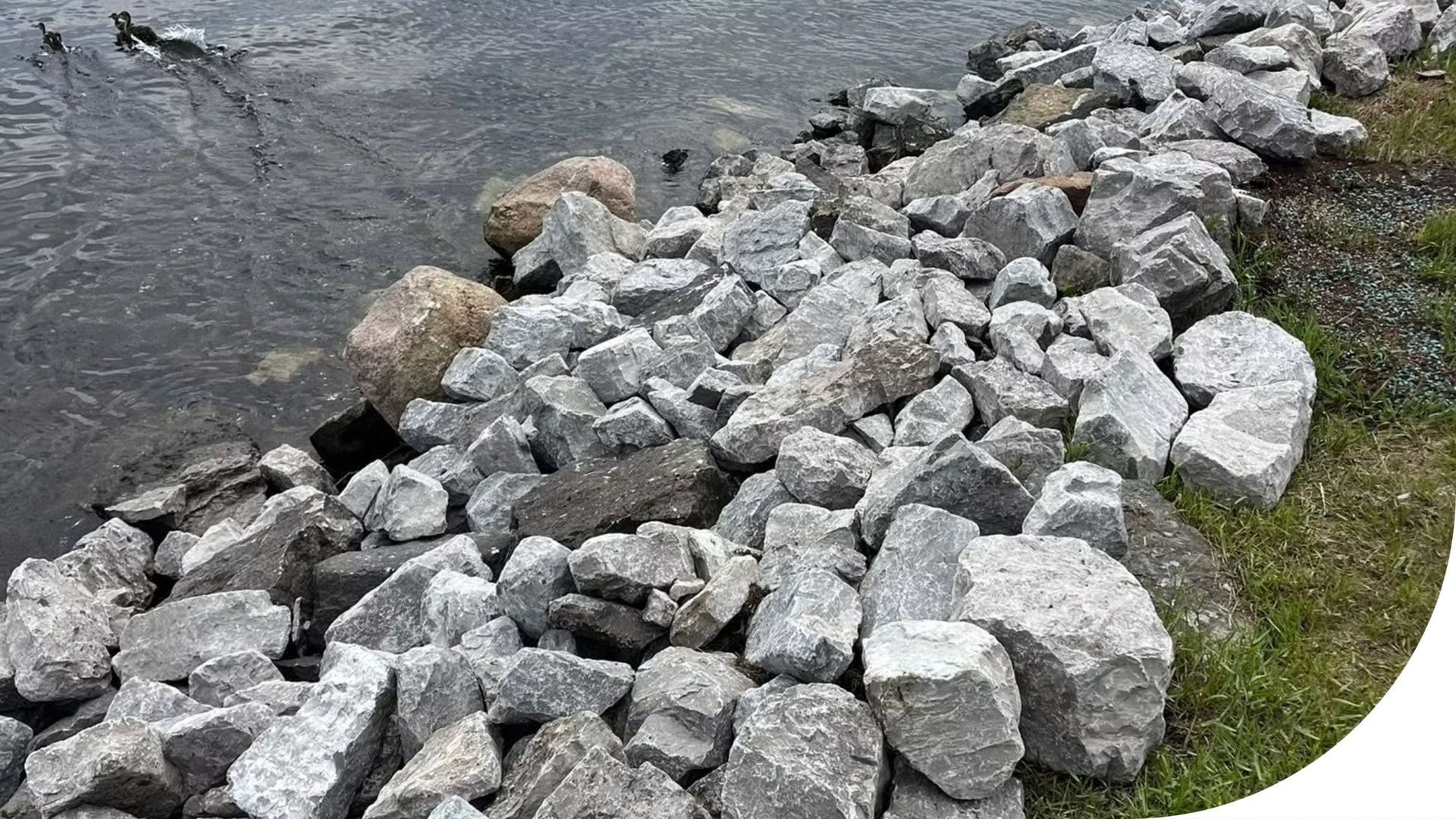
Riprap is a layer of appropriately sized stone placed along a shoreline or bank to help resist erosion.
Instead of allowing waves to strike exposed soil directly, the stone creates a protective surface that helps absorb and dissipate some of that energy.
Riprap can be especially useful where shorelines experience moderate to high wave energy or where erosion conditions make vegetation-only stabilization impractical.
But effective riprap installation involves much more than dumping rocks along the water's edge.
The stone must be appropriately selected and placed to fit the shoreline's conditions.
A properly designed installation may include a prepared slope, filter material beneath the stone, correctly sized rock, and stabilization of the upper bank.
These details help limit soil movement from behind the stone and improve long-term performance.
The result should provide erosion protection while fitting naturally into the surrounding waterfront landscape.
Why You Can't Just Dump Rock Along the Shore
From a distance, riprap may look simple.
It's rock placed along the water.
But shoreline stabilization is a specialized type of excavation and erosion-control work.
If stones are too small, water may move them. If the underlying soil isn't properly protected, fine material can wash out from behind the rock. If the shoreline slope is unsuitable, the installation may not perform as intended.
Even stone placed in the wrong location can cause problems by changing how water interacts with neighboring areas.
That's why shoreline projects need a site-specific approach.
The proper design depends on factors such as:
- The slope and condition of the shoreline
- Wave exposure and water movement
- Soil characteristics
- Existing vegetation and erosion
- Applicable environmental regulations
A professional evaluation helps determine whether riprap is appropriate and what kind of installation is needed.
Riprap Isn't the Right Solution for Every Shoreline
One important thing for Wisconsin waterfront owners to understand is that rock isn't automatically the best answer.
Some shorelines benefit more from natural vegetation and other bioengineering techniques.
Deep-rooted native plants can help stabilize soil, slow surface runoff, and create valuable habitat along the water's edge.
In lower-energy environments, natural stabilization may provide effective erosion control with less impact on the shoreline's natural characteristics.
In other situations, a combination of vegetation and riprap may make sense.
The Wisconsin Department of Natural Resources generally encourages natural shoreline protection where appropriate and recognizes riprap as an option for certain higher-energy or actively eroding sites.
You can learn more through the Wisconsin DNR's shoreline erosion guidance.
The goal should always be to choose a solution suited to the property's actual conditions rather than assuming every shoreline needs the same treatment.
Does Shoreline Riprap Require a Permit in Wisconsin?
Before installing or replacing shoreline protection, it's important to understand the applicable regulations.
Wisconsin regulates many activities affecting lakes, rivers, and other navigable waterways.
Some qualifying riprap projects may be exempt from a Wisconsin DNR permit, while others require general or individual permit approval.
Requirements depend on several factors, including the type of waterbody, project dimensions, environmental designations, and whether the proposed work meets specific exemption criteria.
Local shoreland zoning rules may also apply, even when a project qualifies for a state-level exemption.
Never assume shoreline work is automatically permitted simply because the property belongs to you.
The best approach is to review current regulations and confirm which approvals are needed before construction begins.
The Wisconsin DNR shoreline erosion control permitting page explains the available permitting paths and exemption criteria.
Planning around these requirements early helps avoid delays and potentially expensive corrections.
Why Fall Is a Good Time to Evaluate Shoreline Damage
By November, many Wisconsin lakefront owners are wrapping up their waterfront activities for the season.
Boats and docks may be coming out of the water, and the shoreline is easier to inspect without the distractions of summer activity.
That makes late fall a useful time to look for changes.
Walk the accessible parts of the property and compare them with previous years.
- Has the shoreline receded?
- Are rocks shifting?
- Have plants washed away?
- Is soil becoming exposed?
- Are there places where runoff has carved channels down toward the lake?
Documenting these concerns with photos can help establish whether conditions are changing over time.
However, late fall isn't necessarily the right time to begin construction.
Work schedules, ground conditions, water levels, ecological restrictions, and permitting requirements can all affect when shoreline projects can occur.
An early evaluation gives you time to determine what the property needs and begin planning an appropriate solution.
Protecting Your Shoreline Also Protects Your Landscape
Shoreline erosion doesn't always stay confined to the water's edge.
As soil is lost, it can affect nearby landscape areas, trees, paths, and other features located close to the bank.
This is one reason waterfront landscaping should be approached as a complete system.
The shoreline, drainage, planting areas, and land above the bank all influence one another.
For example, excessive runoff from an improperly graded area may worsen erosion even when the shoreline has some protection in place.
A thoughtful project considers both wave energy from the water and surface water moving across the property.
That may involve shoreline stabilization alongside suitable grading, drainage improvements, or restoration of disturbed landscape areas.
The objective is to help protect the property without creating new problems elsewhere.
Frequently Asked Questions About Shoreline Riprap
How long does riprap last?
A properly designed and installed riprap system can provide long-term erosion protection, but its lifespan depends on stone size, shoreline conditions, wave exposure, foundation preparation, and ongoing maintenance. Periodic inspections are important.
Can riprap stop shoreline erosion completely?
No shoreline protection method can guarantee that erosion will never occur. Properly designed riprap can significantly reduce erosion in suitable conditions, but water movement, runoff, and other factors still need to be considered.
Is riprap better than a seawall?
It depends on the site. Wisconsin DNR guidance generally favors more natural stabilization where practical and identifies riprap as an alternative to vertical seawalls for certain shoreline conditions. The appropriate treatment depends on site characteristics and regulations.
Can I install riprap myself?
Shoreline stabilization requires careful design, appropriate materials, equipment access, and compliance with applicable rules. Because mistakes can damage the shoreline or affect the waterway, professional evaluation is recommended.
When should I have my shoreline inspected?
If you notice active erosion, exposed roots, collapsing banks, or damage to existing shoreline protection, it's wise to seek an evaluation rather than waiting for the condition to worsen.
Protect Your Wisconsin Shoreline Before More Land Is Lost
Your waterfront property is something worth protecting.
Whether you've noticed erosion along the bank, shifting stone, or damage caused by waves and seasonal ice, understanding the problem is the first step toward finding the right solution.
Zillges Landscape, Fireplace & Excavation provides excavation and shoreline riprap installation services in Oshkosh and the surrounding Fox Valley.
Our team can discuss the site conditions and the shoreline protection work your property may need.
Concerned about erosion along your shoreline?
Contact Zillges to discuss your waterfront project.
You can also learn more about our excavation and shoreline riprap services.
A beautiful waterfront property deserves a shoreline designed for long-term protection.

Share